
Dr. Erika Jaillet ND, RMT on Arthritis and Joint Health
September is Arthritis Awareness Month, an opportunity to draw attention to a condition that affects people in many different ways. Arthritis is often thought of as an inevitable part of getting older, but Dr. Erika Jaillet, ND, RMT, says there is much more to understand, including the importance of recognizing symptoms early, staying active, and taking a comprehensive approach to joint health.
Dr. Jaillet’s interest in naturopathic medicine began when she was a teenager.
“I first saw an ND when I was a teen. Inflammatory presentations can include rheumatoid arthritis, psoriatic arthritis, lupus, and ankylosing spondylitis. Arthritis can also occur as a result of other conditions, including inflammatory bowel disease, celiac disease, and Sjögren’s syndrome, to name a few. Other causes can include infection, neurological conditions, and crystal deposits such as gout and pseudo-gout.”
One of the biggest misconceptions Dr. Jaillet, ND, hears is that arthritis is something everyone will eventually experience as they get older. “A lot of people think that arthritis is a condition that just happens with age, which is not true. It’s not inevitable; we should still strive to keep our joints healthy, whether we develop it or not.”
Because osteoarthritis can develop gradually over many years, recognizing changes in joint health is vital. Dr. Jaillet, ND, says joint pain is often the first thing people notice, but it isn’t the only sign. Other symptoms can include stiffness, particularly evening stiffness, swelling, reduced range of motion, grinding, clicking or popping sounds, and difficulty performing everyday activities. “When someone says they’re in pain, one of the big questions is where?”
Depending on the suspected type of arthritis, diagnosis may involve imaging or blood work. X-rays can help visualize changes involving cartilage and bone, while blood work may be used when inflammatory or autoimmune causes are suspected.
From a naturopathic perspective, Dr. Jaillet, ND, sees considerable opportunity to support joint health through prevention and maintenance. While maintaining a healthy body weight and addressing injuries early are important, her biggest recommendation is staying active.
She challenges the common belief that exercise contributes to osteoarthritis simply because the condition involves cartilage degeneration. The relationship is more nuanced than “wear and tear”, says Dr. Jaillet, ND, pointing to a particular study involving marathon runners which revealed they did not increase the risk of osteoarthritis despite the repetitive and demanding movements.
For people who already have arthritis, the type and intensity of exercise may need to be adapted. “When talking about maintenance, then we have to be more careful, because once arthritis is present, we need to be more creative with what kind of exercise we should be doing.” Aquatic exercise, for example, can be useful because it reduces pressure on the joints.
Exercise, however, is only one piece of the picture. Dr. Jaillet, ND, also discusses nutrition, recommending a Mediterranean-style approach that emphasizes whole foods, polyphenols, and adequate protein to help maintain muscle mass. She also uses a variety of supplements in her practice for management, including curcumin, ginger, Boswellia, omega-3 fatty acids, and collagen.
Sleep is another important part of the puzzle. “We oftentimes forget to include the importance of sleep. Adequate sleep really helps with tissue repair and to control our levels of inflammation as well – very important when we’re talking about anything related to the musculoskeletal system.”
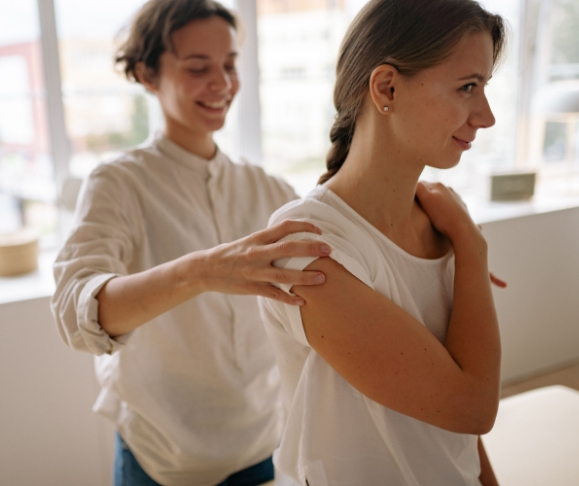
When it comes to naturopathic care, the goal is to understand the full picture of a person’s health and how different factors may intersect. Dr. Jaillet’s approach can include manual therapy, acupuncture, massage, and hydrotherapy, which she views as complementary to other aspects of care, particularly following an injury.
“The joints and muscles really go together. If the muscles are tight, it’s going to affect joint function. And if the joint is affected, the muscles are going to be tight. We can’t think of either one in isolation.” She emphasizes the importance of addressing an injury early to help restore joint and muscle function, and potentially reduce the risk of developing arthritis related to that injury later.
When asked what practical step people could take today to support their joint health, Dr. Jaillet, ND, keeps it simple: stay active and choose something you enjoy, “because doing something consistently is better than doing something that’s ‘optimal’, but occasionally.”
For those who are ready to do more, she recommends incorporating strengthening, stability, and balance exercises, as well as activities that load the bones and joints, like skipping or burpees, when appropriate.
Dr. Jaillet, ND, is taking a step herself towards greater collaboration between naturopathic doctors and medical doctors. She is transitioning to a clinic with a sub-focus on pain management, which brings together nurse practitioners, medical doctors, and other health professionals in an uncommon, fully integrative model.
Clearer regulation and title protection could help make this kind of partnership easier. NBAND (New Brunswick Association of Naturopathic Doctors) has completed draft title protection legislation that would ensure only qualified NDs in New Brunswick can use the title “Naturopathic Doctor” and continues to work with the Ministry of Health to move the proposed legislation forward.
Ultimately, arthritis is not a one-size-fits-all condition, and there is no single approach that works for everyone. Dr. Jaillet’s proactive perspective puts long-term health at the centre of the conversation – because the more we understand about what contributes to joint health, the better equipped we are to make informed choices about how we move, live and care for our bodies.
Dr. Erika Jaillet is a naturopathic doctor and registered massage therapist, with a focus on pain management. Her clinical interests include musculoskeletal health, movement, and comprehensive approaches to chronic pain. A yoga teacher and advocate for active living, she brings together her clinical expertise and passion for movement to support patients in achieving better overall health and mobility.